What Is the Equivalent Grade of a Steel Material?
The equivalent grade of a steel material refers to a steel grade from another standard or country that has similar chemical composition, mechanical properties, and performance characteristics, making it suitable for use as an alternative in engineering applications.
Because different countries use different standards—ASTM (USA), EN (Europe), JIS (Japan), DIN (Germany), GOST (Russia), GB (China)—engineers often need to identify which materials match or can replace each other.
Equivalent grades ensure that materials from different standards can be used safely and interchangeably when approved by engineering or project specifications.
Finding the equivalent grade of a steel material is a common engineering and procurement task, especially when dealing with different international standards (ASTM, EN, JIS, DIN, GB,GOST, ISO, etc.)
How to Find the Equivalent Grade of a Steel Material
1. Identify the Original Standard and Specification
Before searching for an equivalent, you must know:
- The standard organization (ASTM, EN, JIS, DIN, GOST, GB, etc.)
- The product form (pipe, plate, flange, fitting, bar, forging)
- The grade or chemical designation
Example: ASTM A182 F316L → forged flange material.
Different product forms have different standards, even with the same material.
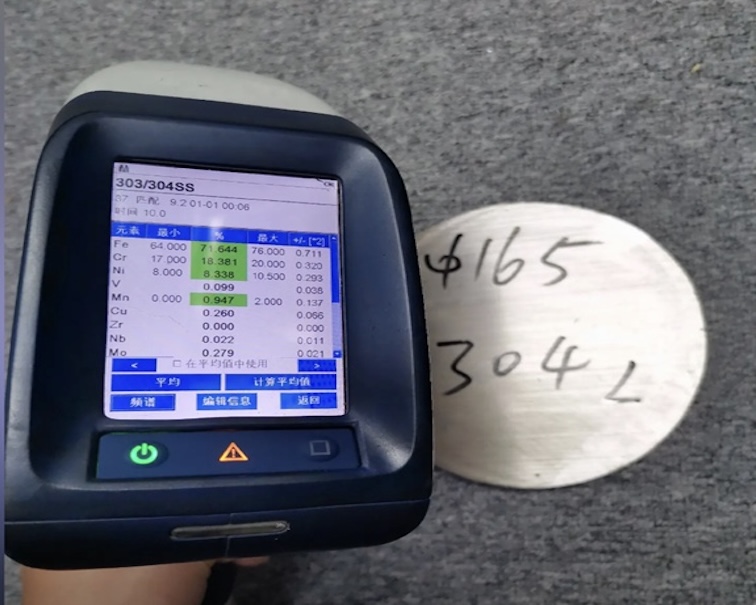
2. Check the Chemical Composition
Equivalent materials must have similar chemical composition, including:
- Carbon (C), Manganese (Mn), Silicon (Si)
- Chromium (Cr), Nickel (Ni), Molybdenum (Mo)
- Nitrogen (N), Titanium (Ti), Niobium (Nb)
- Low elements (P, S)
Two grades are generally considered equivalent if chemical composition matches within the allowable ranges.
Example:
EN 1.4404 ≈ ASTM 316L (same Cr-Ni-Mo range, low carbon)
3. Compare Mechanical Properties
Materials must also meet similar:
- Yield strength
- Tensile strength
- Elongation
- Hardness
- Impact toughness (if required, e.g., LT test)
If the mechanical properties differ significantly, the materials may not be interchangeable even if chemistry is similar.
4. Confirm the Material’s Product Form and Processing Requirements
Equivalency depends on:
- Heat treatment (solution annealed, normalized, quenched & tempered)
- Manufacturing method (forged, seamless, rolled)
- Delivery conditions (A, N, QT, SR, etc.)
- Thickness effect on properties
For example:
- ASTM A182 F51 (forged duplex steel)
is not directly equivalent to: - ASTM A790 S31803 (pipe material), even though the chemistry is similar.
5.Use Trusted Professional Reference Sources
6.Get Engineering Approval (if used for pressure or safety equipment)
For pressure vessels, boilers, pipelines, offshore structures, shipbuilding, or nuclear industries:
Engineering approval or customer approval is mandatory before substituting materials.
Example:
Replacing SA516 Gr.70 with P355NL2 requires customer approval due to impact test differences.
Below the most common and recognized comparison table for the equivlant material
Download Materials comparison DIN / EN / ASTM
| Pipes / Tubes | Flanges | Buttwelding Fittings | ||||||||
| Material number | EN | ASTM | Material number | EN | ASTM | Material number | EN | ASTM | ||
| Non-alloy | Non-alloy | Non-alloy | ||||||||
| 1.0254 St 37.0 | P235TR1 | A 53 Grade A | 1.0038 1.0570 | RSt 37-2 St 52-3 | S235JR S355J2 (1.0577) | – – | 1.0254 St 37.0 – – | S235 – | – – | |
| 1.0570 St 52-3 | S355J2H (1.0576) | – | ||||||||
| 1.0305 St 35.8/I | P235GH TC1 (1.0345) | A 106 Grade A | 1.0460 C 22.8 | P250GH | – | 1.0305 St 35.8/I | P235GH (1.0345) | A 234 Grade WPA | ||
| 1.0305 St 35.8/III | P235GH TC2 (1.0345) | – | 1.0432 C 21 | – | A 105 | 1.0305 St 35.8/III | P235GH (1.0345) | – | ||
| 1.0405 St 45.8/I | P265GH TC1 (1.0425) | A 106 Grade B | 1.0352 – | P245GH | – | 1.0405 St 45.8/I | P265GH (1.0425) | A 234 Grade WPB | ||
| 1.0405 St 45.8/III | P265GH TC2 (1.0425) | – | – – | – | – | 1.0405 St 45.8/III | P265GH (1.0425) | – | ||
| Alloyed heat-resistant | Alloyed heat-resistant | Alloyed heat-resistant | ||||||||
| 1.5415 15 Mo 3 | 16Mo3 | A 335 Grade P1 | 1.5415 15 Mo 3 | 16Mo3 | A 182 Grade F1 | 1.5415 15 Mo 3 | 16Mo3 | A 234 Grade WP1 | ||
| 1.7335 13 CrMo 4 4 | 13CrMo4–5 | A 335 Grade P12 | 1.7335 13 CrMo 4 4 | 13CrMo4-5 | A 182 Grade F12 | 1.7335 13 CrMo 4 4 | 13CrMo4-5 | A 234 Grade WP12 | ||
| – – | – | A 335 Grade P11 | – – | – | A 182 Grade F11 | – – | – | A 234 Grade WP11 | ||
| 1.7380 10 CrMo 9 10 | 10CrMo9–10 | A 335 Grade P22 | 1.7380 10 CrMo 910 | 11CrMo9-10 (1.7383) | A 182 Grade F22 | 1.7380 10 CrMo 910 | 10CrMo9-10 | A 234 Grade WP22 | ||
| 1.7362 12 CrMo 19 5 | X11CrMo5 | A 335 Grade P5 | 1.7362 12 CrMo 195 | – | A 182 Grade F5 | 1.7362 12 CrMo 195 | X11CrMo5 | A 234 Grade WP5 | ||
| – – | – | A 335 Grade P9 | – – | – | A 182 Grade F9 | – – | – | A 234 Grade WP9 | ||
| 1.4903 – | X10CrMoVNb9–1 | A 335 Grade P91 | 1.4903 – | X10CrMoVNb9-1 | A 182 Grade F91 | 1.4903 – | X10CrMoVNb9-1 | A 234 Grade WP91 | ||
| Low temperature | Low temperature | Low temperature | ||||||||
| 1.5637 10 Ni 14 | X12Ni14 | A 333 Grade 3 | 1.5637 10 Ni 14 | 12Ni14 | A 350 Grade LF3 | 1.5637 10 Ni 14 | 12Ni14 | A 420 Grade WPL3 | ||
| 1.0356 TTSt 35 N | P215NL (1.0451) | A 333 Grade 1 | 1.0566 TStE 355 | P355QH1 (1.0571) | A 350 Grade LF2 | 1.0356 TTSt 35 N | P215NL (1.0451) | – | ||
| 1.0356 TTSt 35 V | P255QL (1.0452) | – | – – | – | – | 1.0356 TTSt 35 V | – | – | ||
| – – | P265NL (1.0453) | A 333 Grade 6 | – – | – | – | – – | P265NL (1.0453) | A 420 Grade WPL6 | ||
| Fine-grain steels | Fine-grain steels | Fine-grain steels | ||||||||
| 1.0486 StE 285 | – | API 5L Grade X42 | 1.0486 StE 285 | – | A 694 Grade F42 | 1.0486 StE 285 | – | A 860 Grade WPHY42 | ||
| 1.0562 StE 355 | P355N | API 5L Grade X52 | 1.0562 StE 355 | P355N | A 694 Grade F52 | 1.0562 StE 355 | P355N | A 860 Grade WPHY52 | ||
| 1.8902 StE 420 | P420N | API 5L Grade X60 | 1.8902 StE 420 | P420N | A 694 Grade F60 | 1.8902 StE 420 | – | A 860 Grade WPHY60 | ||
| 1.8905 StE 460 | P460N | API 5L Grade X70 | 1.8905 StE 460 | P460N | A 694 Grade F70 | 1.8905 StE 460 | – | A 860 Grade WPHY70 | ||
| High yield steels | High yield steels | High yield steels | ||||||||
| 1.0457 StE 240.7 | L245NB / L245NE | API 5L Grade B | – – | – | – | 1.0457 StE 240.7 | – | – | ||
| 1.0484 StE 290.7 | L290NB / L290NE | API 5L Grade X42 | – – | – | – | 1.0484 StE 290.7 | L290NB / L290NE | A 860 Grade WPHY42 | ||
| 1.0582 StE 360.7 | L360NB / L360NE | API 5L Grade X52 | – – | – | – | 1.0582 StE 360.7 | L360NB / L360NE | A 860 Grade WPHY52 | ||
| 1.8972 StE 415.7 | L415NB / L415NE | API 5L Grade X60 | – – | – | – | 1.8972 StE 415.7 | L415NB / L415NE | A 860 Grade WPHY60 | ||
| Stainless steel | Stainless steel | Stainless steel | ||||||||
| 1.4307 – | X2CrNi18-9 | A 312 Grade TP304L | 1.4307 – | X2CrNi18-9 | A 182 Grade F304L | 1.4307 – | X2CrNi18-9 | A 403 Grade WP304L | ||
| 1.4306 X 2 CrNi 19 11 | X2CrNi19-11 | A 312 Grade TP304L | 1.4306 X 2 CrNi 19 11 | – | A 182 Grade F304L | 1.4306 X2CrNi19 11 | X2CrNi19-11 | A 403 Grade WP304L | ||
| 1.4301 X 5 CrNi 18 10 | X5CrNi18-10 | A 312 Grade TP304 | 1.4301 X 5 CrNi 18 10 | X5CrNi18-10 | A 182 Grade F304 | 1.4301 X5CrNi18 10 | X5CrNi18-10 | A 403 Grade WP304 | ||
| 1.4541 X 6 CrNiTi 18 10 | X6CrNiTi18-10 | A 312 Grade TP321 | 1.4541 X 6 CrNiTi 18 10 | X6CrNiTi18-10 | A 182 Grade F321 | 1.4541 X6CrNiTi1810 | X6CrNiTi18-10 | A 403 Grade WP321 | ||
| 1.4550 X 6 CrNiNb 18 10 | X6CrNiNb18-10 | A 312 Grade TP347 | 1.4550 X 6 CrNiNb 18 10 | X6CrNiNb18-10 | A 182 Grade F347 | 1.4550 X6CrNiNb1810 | X6CrNiNb18-10 | A 403 Grade WP347 | ||
| 1.4404 X 2 CrNiMo 17 13 2 | X2CrNiMo17-12-2 | A 312 Grade TP316L | 1.4404 X 2 CrNiMo 17 13 2 | X2CrNiMo17-12-2 | A 182 Grade F316L | 1.4404 X2CrNiMo17132 | X2CrNiMo17-12-2 | A 403 Grade WP316L | ||
| 1.4401 X 5 CrNiMo 17 12 2 | X5CrNiMo17-12-2 | A 312 Grade TP316 | 1.4401 X 5 CrNiMo 17 12 2 | X5CrNiMo17-12-2 | A 182 Grade F316 | 1.4401 X5CrNiMo17122 | X5CrNiMo17-12-2 | A 403 Grade WP316 | ||
| 1.4571 X 6 CrNiMoTi 17 12 2 | X6CrNiMoTi17-12-2 | A 312 Grade S 31635 | 1.4571 X 6 CrNiMoTi 17 12 2 | X6CrNiMoTi17-12-2 | A 182 Grade F316Ti | 1.4571 X 6 CrNiMoTi 17 12 2 | X6CrNiTi18-10 | – | ||
| 1.4429 X 2 CrNiMoN 17 13 3 | X2CrNiMoN17-13-3 | A 312 Grade TP316LN | 1.4429 X 2 CrNiMoN 17 13 3 | X2CrNiMoN17-13-3 | A 182 Grade F316LN | 1.4429 X2CrNiMoN17133 | X2CrNiMoN17-13-3 | A 403 Grade WP316LN | ||
| 1.4436 X 5 CrNiMo 17 13 3 | X3CrNiMo17-13-3 | A 312 Grade TP316 | 1.4436 X 5 CrNiMo 17 13 3 | X3CrNiMo17-13-3 | A 182 Grade F316 | 1.4436 X 5 CrNiMo17133 | X3CrNiMo17-13-3 | A 403 Grade WP316 | ||
| 1.4435 X 2 CrNiMo 18 14 3 | X2CrNiMo18-14-3 | A 312 Grade TP316L | 1.4435 X2CrNiMo18143 | X2CrNiMo18-14-3 | A 182 Grade F316L | 1.4435 X2CrNiMo18 14 3 | X2CrNiMo18-14-3 | A 403 Grade WP316LN | ||
| 1.4439 X 2 CrNiMoN 17 13 5 | X2CrNiMoN17-13-5 | UNS S 31726 | 1.4439 X 2 CrNiMoN17135 | X2CrNiMoN17-13-5 | A 182 Grade F48 | 1.4439 X2CrNiMoN17135 | X2CrNiMoN17-13-5 | UNS S 31726 | ||
| 1.4539 X 1 NiCrMoCuN 25 20 5 | X1NiCrMoCu25-20-5 | UNS N 08904 (904L) | 1.4539 X 1 NiCrMoCuN25205 | X1NiCrMoCu25-20-5 | A 182 Grade F904L | 1.4539 X1NiCrMoCuN25205 | X1NiCrMoCu25-20-5 | UNS N 08904 (904L) | ||
| 1.4547 – | X1CrNiMoCuN20-18-7 | UNS S 31254 | 1.4547 – | X1CrNiMoCuN20-18-7 | UNS S 31254 | 1.4547 – | X1CrNiMoCuN20-18-7 | UNS S 31254 | ||
| 1.4529 X 1 NiCrMoCuN 25 20 6 | X1NiCrMoCuN25-20-7 | UNS N 08926 | 1.4529 X1NiCrMoCuN25206 | X1NiCrMoCuN25-20-7 | UNS N 08926 | 1.4529 X1NiCrMoCuN25206 | X1NiCrMoCuN25-20-7 | UNS N 08926 | ||
| 1.4462 X 2 CrNiMoN 22 5 3 | X2CrNiMoN22-5-3 | UNS S 31803 (Duplex) | 1.4462 X2CrNiMoN 22 5 3 1.4410 – | X2CrNiM0N22-5-3 X2CrNiMoN25-7-4 | A 182 Grade F51 (Duplex) A 182 Grade F53 (Superduplex) | 1.4462 X 2 CrNiMoN 22 5 3 1.4410 – | X2CrNiMoN22-5-3 X2CrNiMoN25-7-4 | UNS S 31803 (Duplex) UNS S 32750 (Superduplex) | ||
| 1.4410 – | X2CrNiMoN25-7-4 | UNS S 32750 (Superduplex) | ||||||||