ASTM A312 and ASTM A213 – What’s the Difference?
When selecting stainless steel materials for piping and tubing, We might have the same grade ,for example ASTM A312 TP316L pipe ,and ASTM A213 TP316L pipe to chose,which grade is more suistable for our project? In this page,you would Understand the differences between ASTM A312 and ASTM A213 . These two standards are widely used across industries but they are applied for different purposes in terms of application, specification, and mechanical properties.
What is ASTM A312?
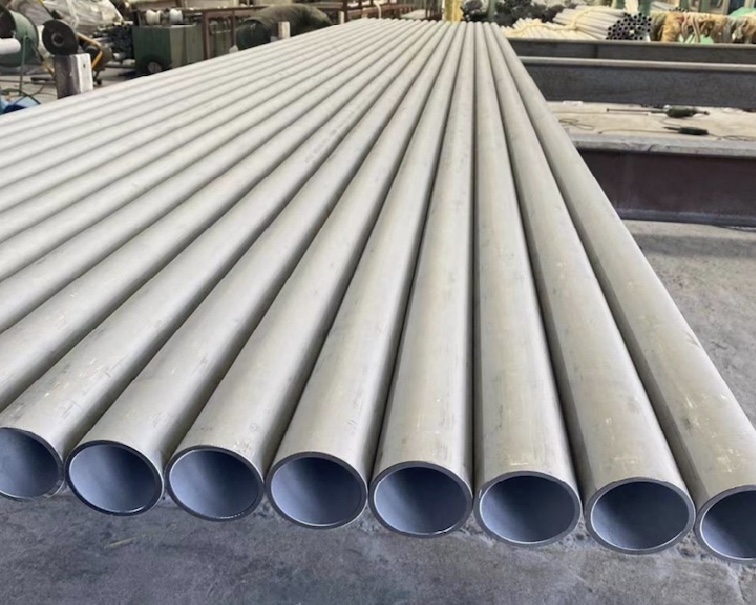
ASTM A312 covers seamless, welded, and heavily cold-worked austenitic stainless steel pipes. It is commonly used in industries such as petrochemical, chemical processing, oil & gas, and general industrial piping systems. The pipes manufactured under ASTM A312 are designed for high-temperature and corrosion-resistant environments.
Stainless steel pipe specification
Grades include TP304/L, TP316/L, TP321/H, Tp347,TP310,310S etc
Sizes range from 1/8” to 48” NPS
Used for fluid transport, structural, and pressure piping
What is ASTM A213?
ASTM A213 is a specification for seamless and welded tubes made from ferritic and austenitic stainless steels. These tubes are primarily used in heat exchanger systems, condensers, boilers, and superheaters due to their high thermal and pressure performance.
Key Features:
- Stainless steel tube specification
- Includes grades like TP304/L, TP316/L, TP321/H, Tp347,TP310,310S etc stainless grade,also covers T11,T22,T5,T9 ect alloy steel grade
- Smaller outside diameters (usually under 5”)
- Designed for precise heat transfer applications
Key difference between ASTM A312 and ASTM A213
| Standard | ASTM A213 | ASTM A312 |
| Product Scope | Seamless or welded tubing, for ferritic and austenitic stainless steels | Welded and Seamless Steel Pipe for austenitic stainless steel grade only |
| Wall Thickness Tolerance | Specify the minimum wall thickness (0, +20%), also accept average wall thickness (+/-10%) | Average Wall Thickness tolernace as per A999 |
| Hardness | 192HBW OR 90HRB Maximum | Do not require |
| Nickel Content of 316H | 11.0 – 14.0%,Mininum 11% | 10.0 – 14.0% |
| Applications | Heat exchangers and Superheaters to maintain the transmission temperature of the different substances. | Stainless steel pipe for high-temperature and general corrosive service. |
Testing Difference between ASTM A312 and ASTM A213
| Standard | ASTM A213 | ASTM A312 |
| Hardness | 192HBW OR 90HRB Maximum | Do not required |
| (Mpa) | ||
| Hydrostatic Test | OD(mm) Pressure max | OD(mm) Pressure max |
| (MPa) | (MPa) | |
| D<25.4, 7Mpa | D≤88.9, 17MPa | |
| 25.4≤D<38.1, 10Mpa | ||
| 38.1≤D<50.8, 14Mpa | ||
| 50.8≤D<76.2, 17MPa | D>88.9, 19MPa | |
| 76.2≤D<127, 24MPa | ||
| D≥127, 31Mpa | ||
| P=220.6t/D | P=2St/D S=50%Rp0.2 | |
| Intergranular Corrosion Test | ASTM A262 E | ASTM A262 E |
| Eddy Current Test | ASTM E426 | ASTM E426 |
| O.D. Tolerance (mm) | O.D. and Tolerance | O.D. and Tolerance |
| D<25.4 +/-0.10 | 10.3≤D≤48.3 +0.40/-0.80 | |
| 25.4≤D≤38.1 +/-0.15 | ||
| 38.1<D<50.8 +/-0.20 | 48.3<D≤114.3 +0.80/-0.80 | |
| 50.8≤D<63.5 +/-0.25 | ||
| 63.5≤D<76.2 +/-0.30 | 114.3<D≤219.1 +1.60/-0.80 | |
| 76.2≤D≤101.6 +/-0.38 | ||
| 101.6<D≤190.5 +0.38/-0.64 | 219.1<D≤457.0 +2.40/-0.80 | |
| 190.5<D≤228.6 +0.38/-1.14 | ||
| W.T. Tolerance | O.D. | O.D. |
| (mm) | W.T. | W.T. |
| Tolerance | Tolerance | |
| D≤38.1 | 10.3≤D≤73.0 | |
| WT +20%/-0 | WT +20.0%/-12.5% | |
| D>38.1 | 88.9≤D≤457.0 | |
| WT +22%/-0 | t/D ≤5% | |
| WT +22.5%/-12.5% | ||
| 88.9≤D≤457.0 | ||
| t/D >5% | ||
| WT +15.0%/-12.5% |
So we can see that,the same steel grade under ASTM A312 and ASTM A213, would have the same chemical compostion and mechanical properties.but the main difference between ASTM A312 and ASTM A213 is their application and dimensional requirements. A312 is designed for fluids transportation piping systems, while A213 is specialized for high-efficiency heat exchange systems in power plants and refineries.
You can Chose the suitable specification to ensures long-term reliability and performance in demanding environments.