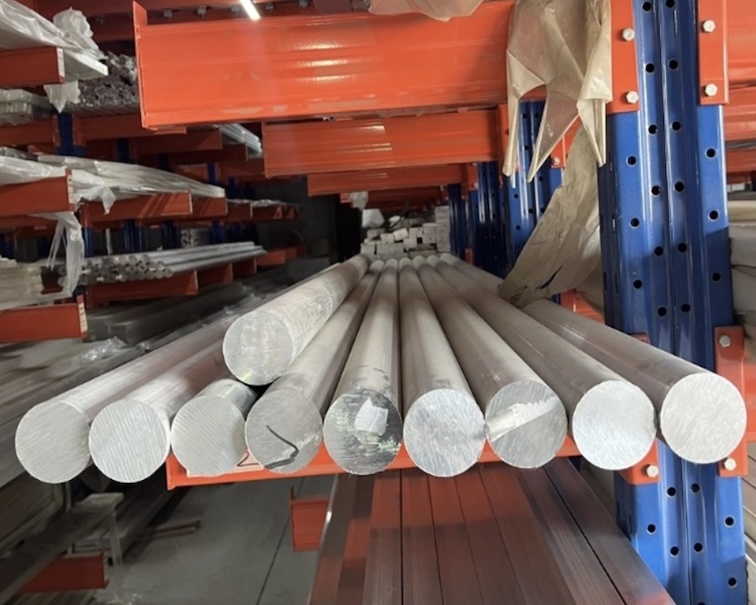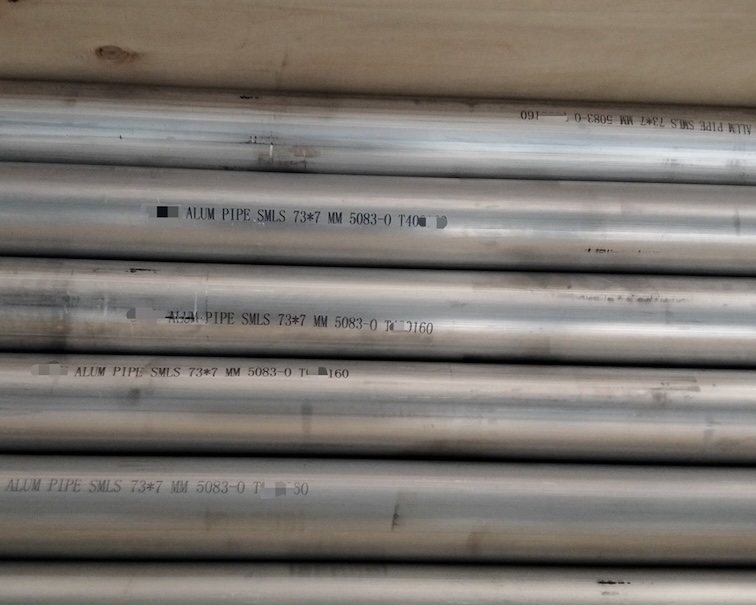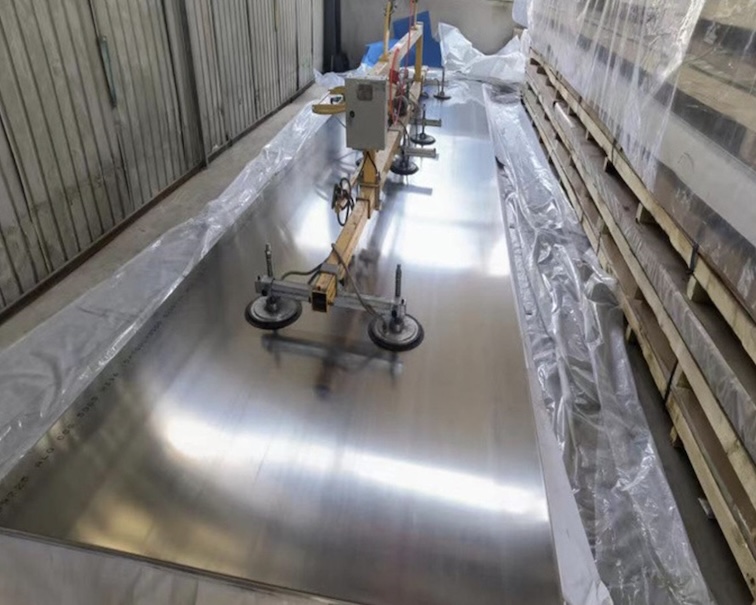
Marine grade Aluminum Plate 5083-H116 and H321
5083 aluminum is a marine-grade, non-heat-treatable alloy with excellent strength, weldability, and corrosion resistance, particularly in seawater and industrial chemical environments. It contains magnesium as its main alloying element (4.0–4.9%), which gives it superior resistance to saltwater corrosion.
The 5083 aluminium alloy is renowned for its high magnesium content, contributing to outstanding corrosion resistance, particularly in saltwater environments.
Both 5083-H116 and 5083-H321 are marine-grade aluminum alloys, known for their excellent corrosion resistance, high strength, and good weldability. However,they have some difference in the thermal stabilization process and intended application conditions because of different Temper.
Aluminum 5083 Composition
| Element | % Content |
|---|---|
| Magnesium (Mg) | 4.0 – 4.9 |
| Manganese (Mn) | 0.4 – 1.0 |
| Chromium (Cr) | 0.05 – 0.25 |
| Iron (Fe) | ≤ 0.40 |
| Silicon (Si) | ≤ 0.40 |
| Copper (Cu) | ≤ 0.10 |
| Zinc (Zn) | ≤ 0.25 |
| Aluminum (Al) | Balance |
Aluminum 5083 H116 and H321 Mechanical Property
| Temper | Specified Thickness, mm – over | Specified Thickness, mm – through | Tensile Strength, MPa – min | Tensile Strength, MPa – max | Yield Strength (0.2 % offset), MPa – min | Yield Strength (0.2 % offset), MPa – max | Elongation, min, in 50 mm | Elongation, min, in 5× Diameter (5.65 √A ) |
| H116 | 1.6 | 12.5 | 305 | … | 215 | … | 10 | … |
| H116 | 12.5 | 30 | 305 | … | 215 | … | … | 10 |
| H116 | 30 | 40 | 305 | … | 215 | … | … | 10 |
| H321 | 40 | 80 | 285 | … | 200 | … | … | 10 |
| H321 | 3.2 | 5 | 305 | 385 | 215 | … | 10 | … |
| H321 | 5 | 12.5 | 305 | 385 | 215 | … | 12 | … |
| H321 | 12.5 | 40 | 305 | 385 | 215 | … | … | 10 |
| H321 | 40 | 80 | 285 | 385 | 200 | … | … | 10 |
Comparison Table of 5083-H116 and 5083-H321
| Property / Feature | 5083-H116 | 5083-H321 |
|---|---|---|
| Temper Definition | Strain-hardened and stabilized for corrosion resistance | Strain-hardened and thermally stabilized |
| Corrosion Resistance | Excellent (especially in saltwater) | Excellent (also good at elevated temperatures) |
| Weldability | Excellent | Excellent |
| Post-Weld Properties | Retains strength and corrosion resistance | Retains strength and corrosion resistance |
| Mechanical Strength | Similar to H321 | Similar to H116 |
| Thermal Stability | Moderate (not heat-treated) | Enhanced via stabilization heat treatment |
| Typical Applications | Boat hulls, decks, tanks, marine structures | Pressure vessels, ship structures, higher-temp marine parts |
| Standards | ASTM B928/B209, ABS, DNV, BV, etc. | ASTM B928/B209, ABS, DNV, BV, etc. |
Key Differences Between 5083 H116 and H321
- H116 is strain-hardened and specifically processed to maximize corrosion resistance in marine environments. It is the go-to choice for hull plating and saltwater exposure.
- H321 undergoes additional thermal stabilization, which makes it more dimensionally stable in elevated temperatures and cyclic loading conditions.
How Choose the right grade for your application.
- Choose 5083-H116 if:
- Your application involves direct seawater immersion
- You need strong anti-corrosion performance
- You’re building ship hulls, tanks, or marine decks
- Choose 5083-H321 if:
- Your structure will face temperature variations or thermal cycling
- You need enhanced dimensional stability
- You’re fabricating pressure vessels, bulkheads, or fuel tanks
Conclusion
Both 5083 H116 and H321 tempers are excellent for marine use, but the choice depends on your environment and thermal requirements. If your application is primarily in seawater at ambient temperatures, go with H116. If temperature fluctuation or thermal stress is a concern, H321 may offer better long-term stability.
⬇️ Download Aluminum 5083 H116 and H321 comparison specification Now (PDF)