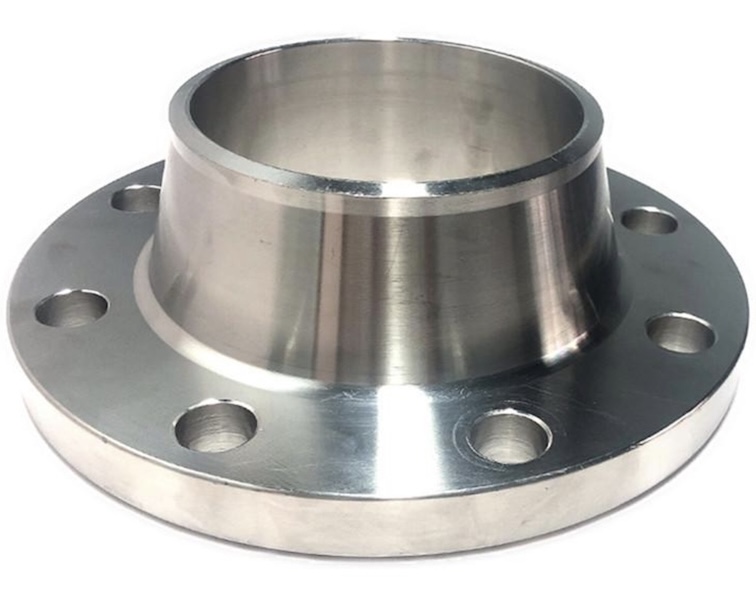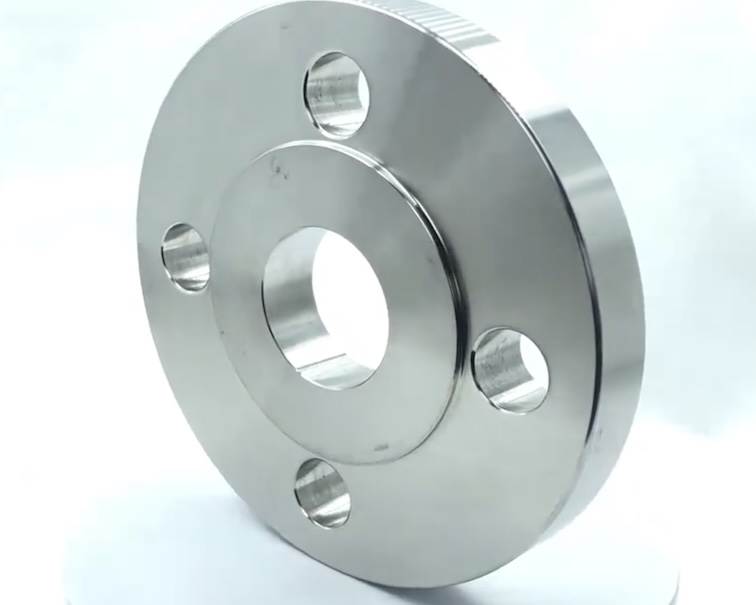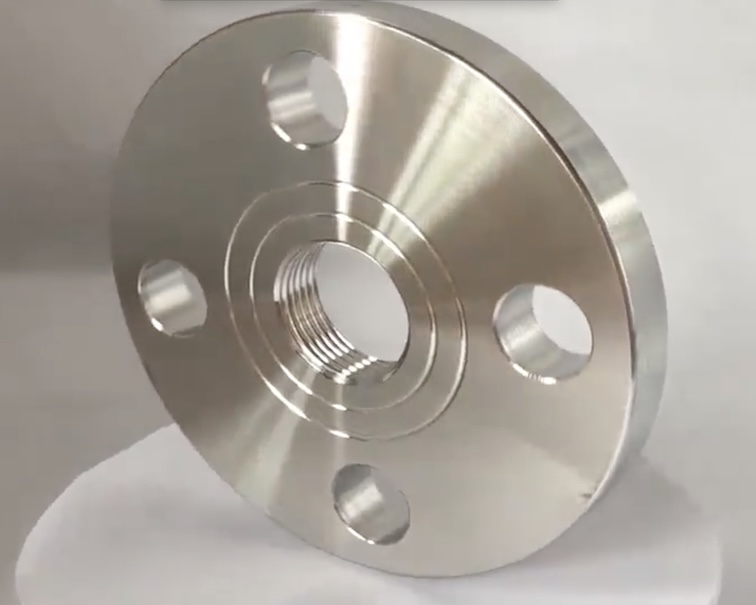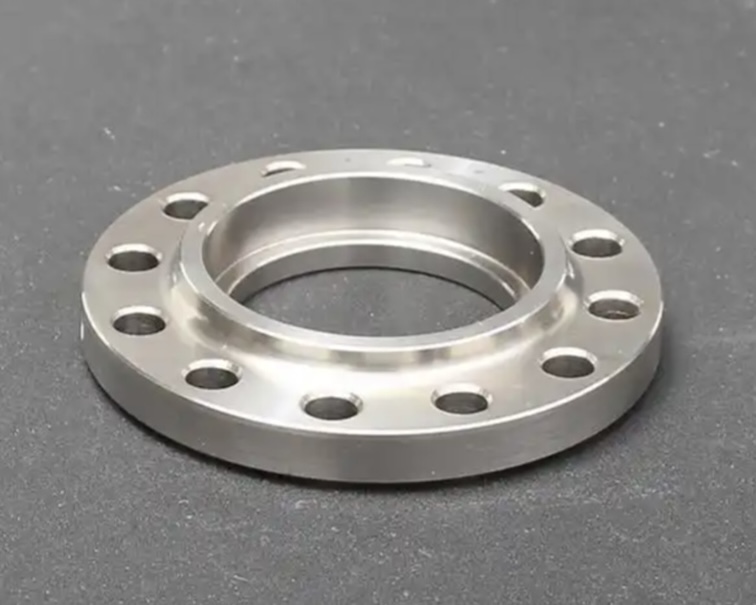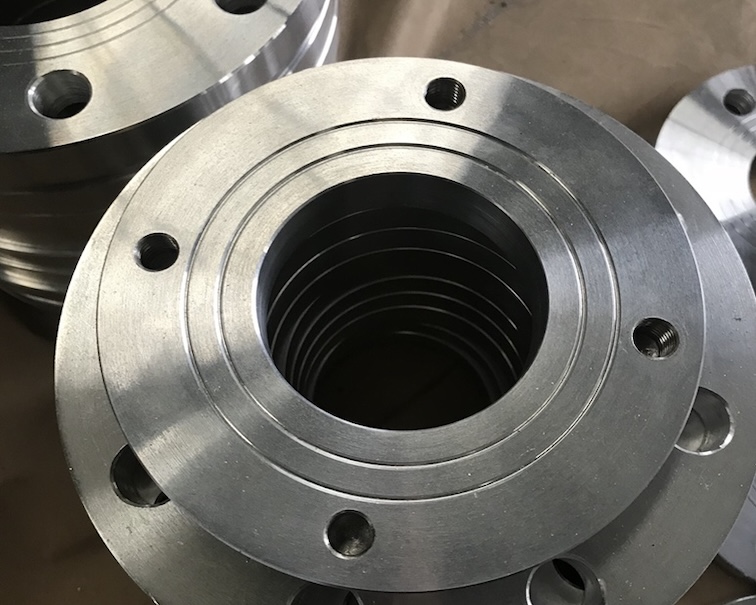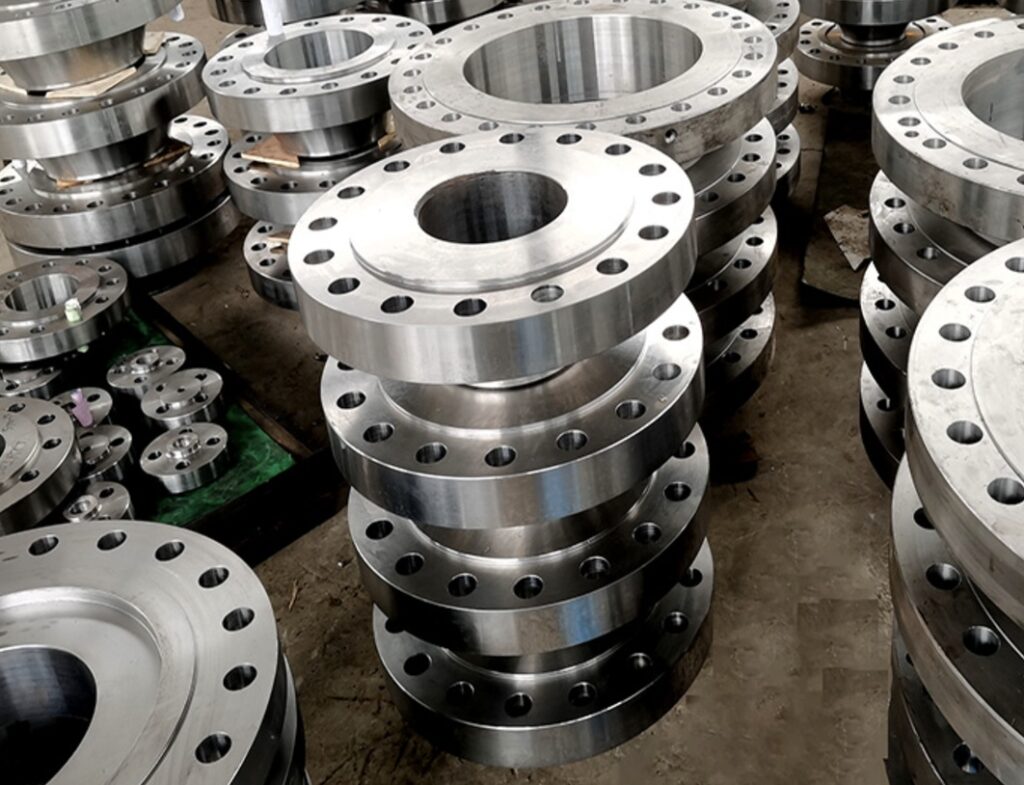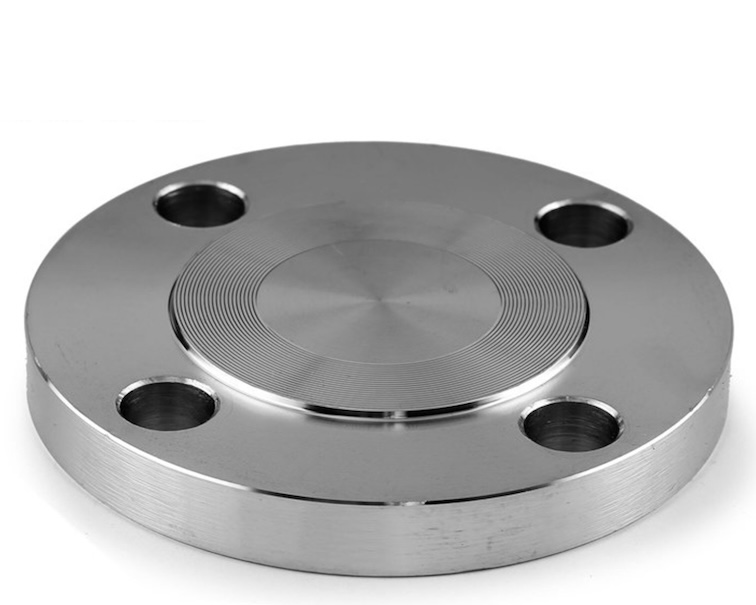
A blind flange (also called a ‘closure plate flange’ or Blank Flange) is installed at the end of a piping system to terminate a pipe. It has no centre hole (bore), so there is no flow through the flange. A blind flange may be used for isolating a pipe, valve, or pressure vessel.
What is a Blind Flange?
A Blind Flange is a solid flange with no bore (no hole in the center), used to seal the end of a piping system or pressure vessel opening. It is bolted into place like other flanges and can be removed when the system needs to be opened, inspected, or extended. Blind flanges are essential for ensuring system integrity, especially under high pressure or hazardous media.
Types of Blind Flanges We Offer:
| Flange Type | Description |
|---|---|
| BL RF (Blind Flange Raised Face) | Most common type for high-pressure pipelines. |
| BL RTJ (Blind Flange Ring Type Joint) | Used for severe, high-pressure applications, especially in oil & gas. |
| BL FF (Blind Flange Flat Face) | Suitable for low-pressure and non-critical piping systems. |
Blind Flange Raised Face
Plain Face/Flat Face (FF)
Flat face (FF) flanges use non-metallic gaskets (soft gaskets) and should always have a serrated sealing surface. This type of flange is well suited to low pressure applications and is used for pressure classes 125 and 250.
The Flat Face flange has a gasket surface in the same plane as the bolting circle face. Applications using flat face flanges are frequently those in which the mating flange or flanged fitting is made from a casting.
Flat face flanges are never to be bolted to a raised face flange. ASME B31.1 says that when connecting flat face cast iron flanges to carbon steel flanges, the raised face on the carbon steel flange must be removed, and that a full face gasket is required. This is to keep the thin, bittle cast iron flange from being sprung into the gap caused by the raised face of the carbon steel flange.
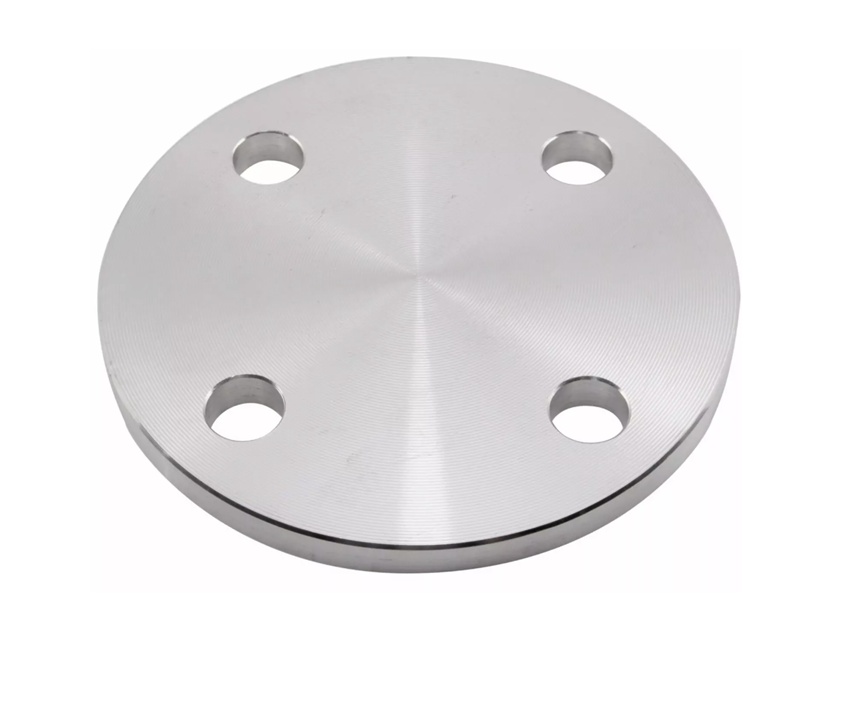
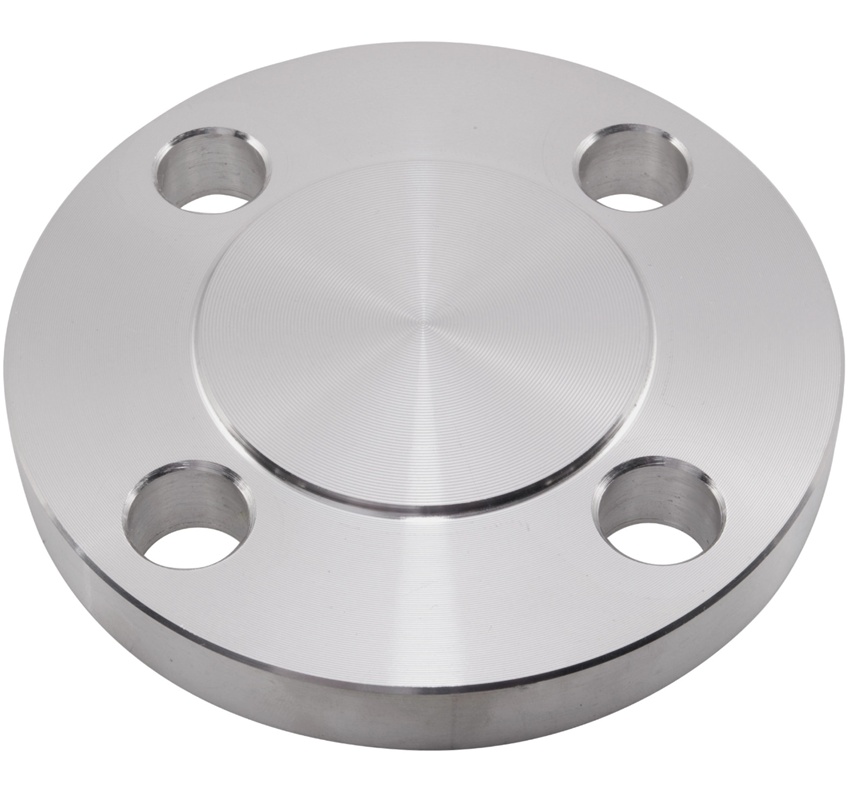
Blind Flange Raised Face (RF)
The Raised Face flange is the most common type used in process plant applications, and is easily to identify. It is referred to as a raised face because the gasket surfaces are raised above the bolting circle face. This face type allows the use of a wide combination of gasket designs, including flat ring sheet types and metallic composites such as spiral wound and double jacketed types.
The purpose of a RF flange is to concentrate more pressure on a smaller gasket area and thereby increase the pressure containment capability of the joint. Diameter and height are in ASME B16.5 defined, by pressure class and diameter. Pressure rating of the flange determines the height of the raised face. The typical flange face finish for ASME B16.5 RF flanges is 125 to 250 µin Ra (3 to 6 µm Ra).
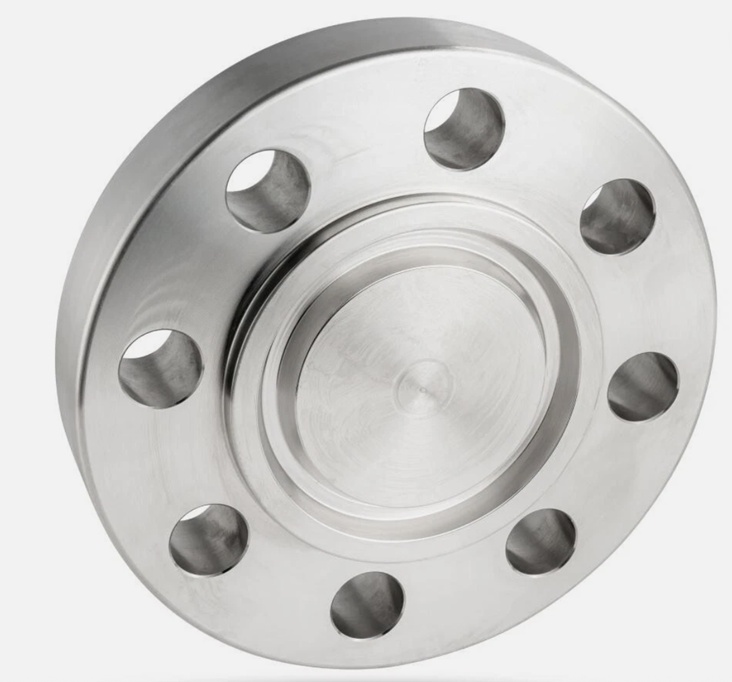
Blind Flanges Ring-Type Joint (RTJ)
The Ring Type Joint flanges are typically used in high pressure (Class 600 and higher rating) and/or high temperature services above 800°F (427°C). They have grooves cut into their faces which steel ring gaskets. The flanges seal when tightened bolts compress the gasket between the flanges into the grooves, deforming (or Coining) the gasket to make intimate contact inside the grooves, creating a metal to metal seal.
An RTJ flange may have a raised face with a ring groove machined into it. This raised face does not serve as any part of the sealing means. For RTJ flanges that seal with ring gaskets, the raised faces of the connected and tightened flanges may contact each other. In this case the compressed gasket will not bear additional load beyond the bolt tension, vibration and movement cannot further crush the gasket and lessen the connecting tension.
Blind Flanges Standard:
| Standard | Range | Pressure Class / PN |
|---|---|---|
| ASME B16.5 Blind Flange | NPS 1/2” – 24” | Class 150 – 2500 |
| ASME B16.47 Blind Flange | NPS 26” – 60” | Class 75 – 600 |
| EN 1092-1 Type 05 Blind Flange | DN 10 – DN 2000 | PN 6 – PN 100 |
| JIS B2220 Blind Flange | 10A – 1500A | 5K – 40K |
⬇️ Download Dimension of Blind Flange ASME B16.5 Class 150 lbs PDF
⬇️ Download Dimension of Blind Flange ASME B16.5 Class 300 lbs PDF
⬇️ Download Dimension of Blind Flange ASME B16.5 Class 400 lbs PDF
⬇️ Download Dimension of Blind Flange ASME B16.5 Class 600 lbs PDF
⬇️ Download Dimension of Blind Flange ASME B16.5 Class 900 lbs PDF
⬇️ Download Dimension of Blind Flange ASME B16.5 Class 1500 lbs PDF
⬇️ Download Dimension of Blind Flange ASME B16.5 Class 2500 lbs PDF
EN 1092-1 Type 05 Blind Flange
⬇️EN 1092-1 Type 05 PN6 Blind flange dimension and Weight
⬇️EN 1092-1 Type 05 PN10 Blind flange dimension and Weight
⬇️EN 1092-1 Type 05 PN16 Blind flange dimension and Weight
⬇️EN 1092-1 Type 05 PN25 Blind flange dimension and Weight
⬇️EN 1092-1 Type 05 PN40 Blind flange dimension and Weight
Blind Flange Materials We Offer
| Standard | Material Grade |
|---|---|
| Carbon Steel | ASTM A105, A350 LF2, A694 F52/F60/F65,ASTM A694 F70 |
| Stainless Steel | ASTM A182 F304/L, F316/L, F321, F347, F51, F53, F55 |
| Alloy Steel | ASTM A182 F11, F12,F22, F5, F9, F91 |
| Nickel Alloys | Inconel 625, Incoloy 825, Hastelloy C276 |
| Duplex / Super Duplex | UNS S31803, S32205, S32750, S32760 |
| Special Materials | 904L (1.4539), Monel 400, Titanium, Aluminum, Copper-Nickel |
Manufacturing & Testing for Blind Flange
- Forged blank
- CNC machining
- Heat treatment: Normalizing, Quenching + Tempering, Annealing
- NDT: UT / PT / MT / RT
- PMI, hydrostatic testing, hardness & impact testing (on request)
- MTC: EN 10204 3.1 / 3.2, Third-party inspection (TÜV, SGS, BV)