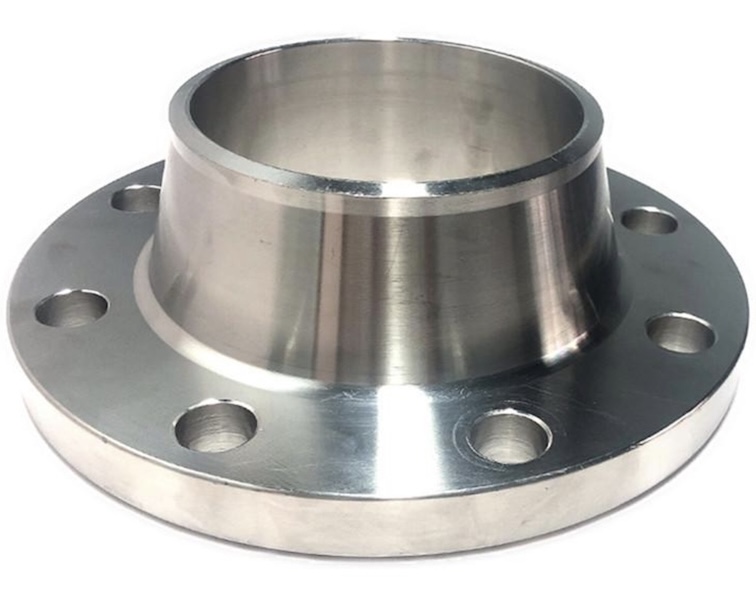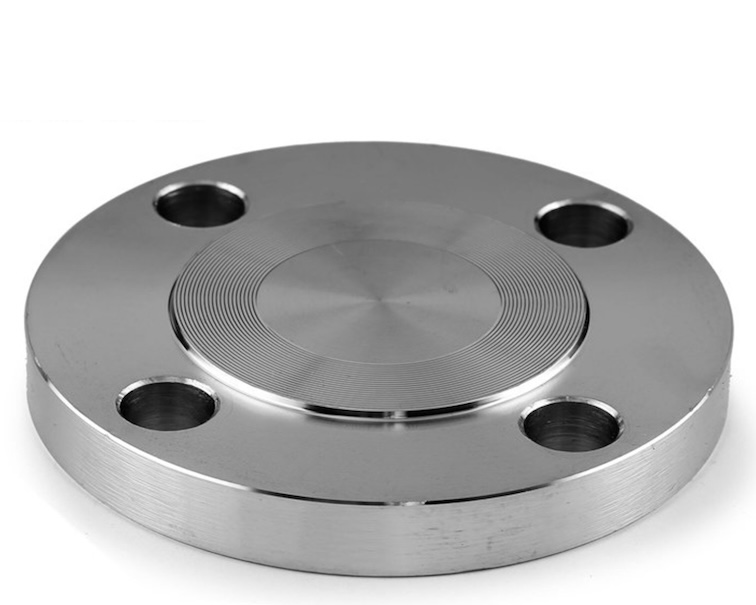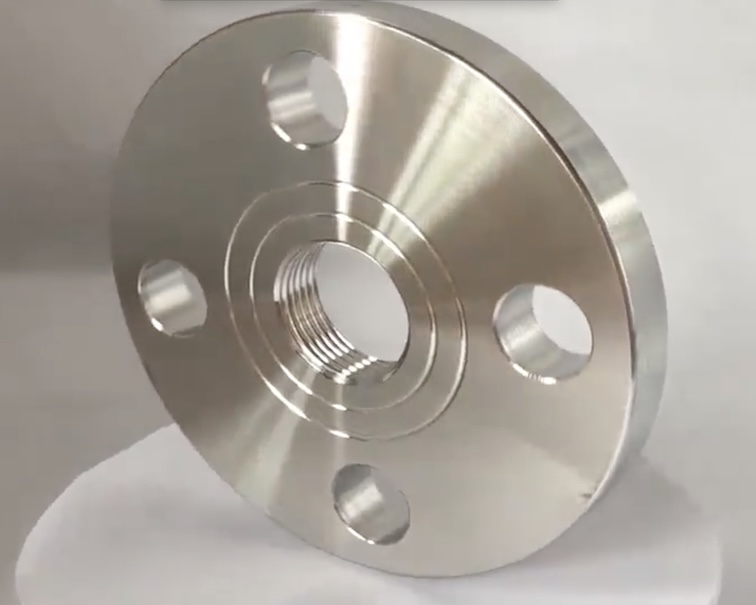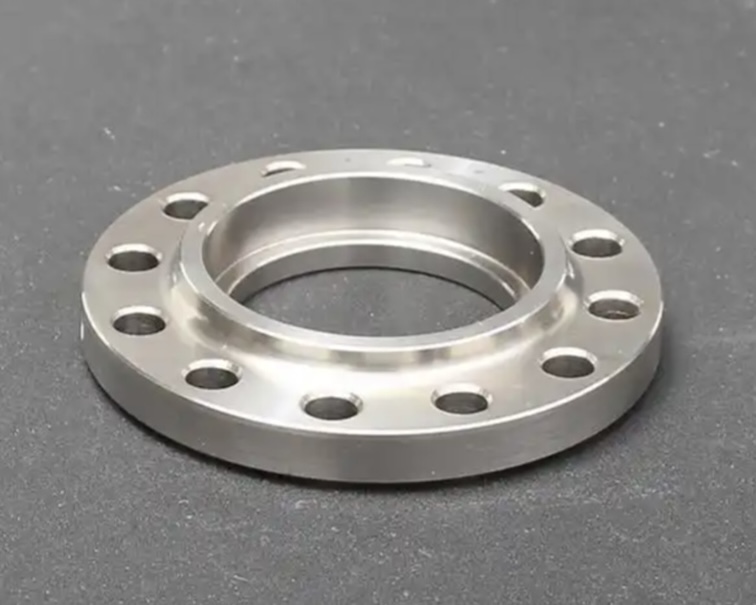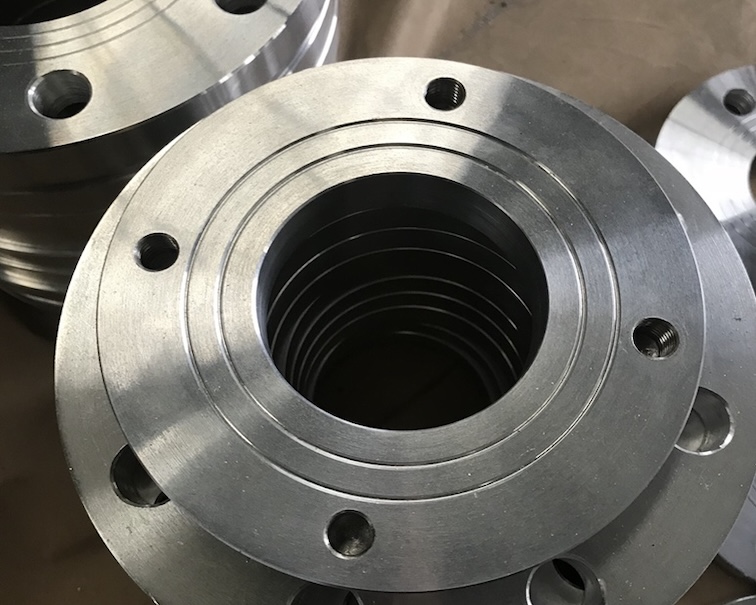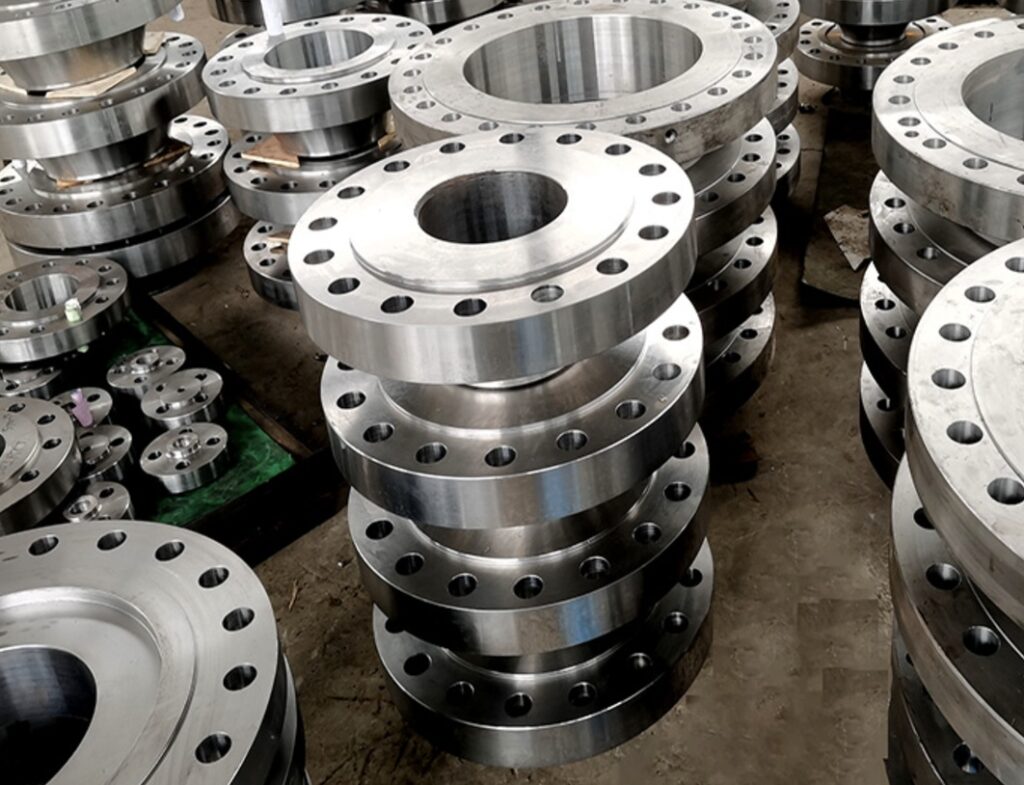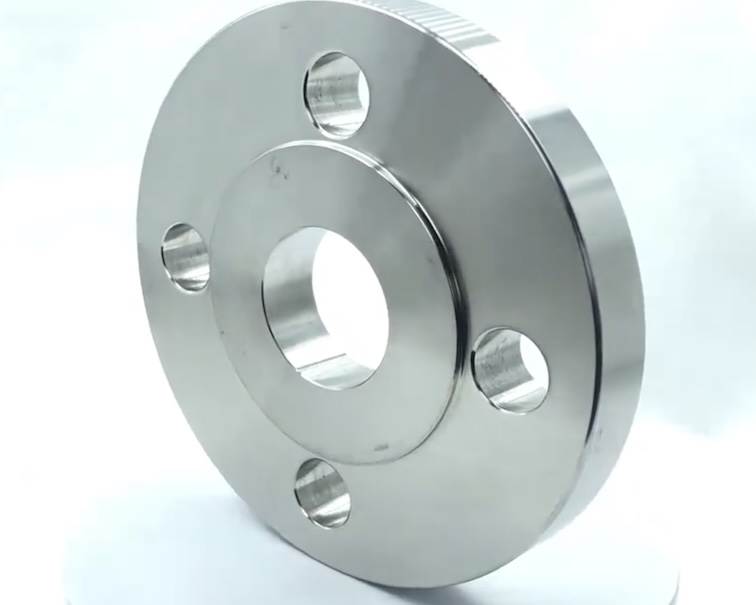
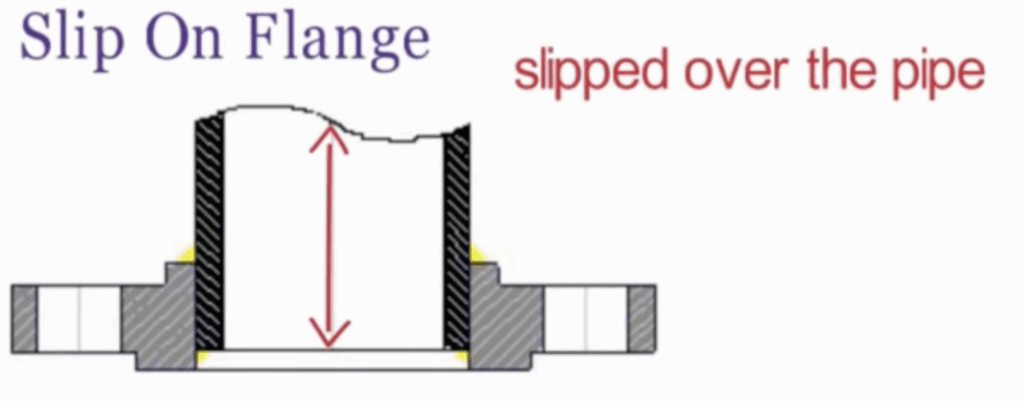
A Slip-On Flange (SO Flange) is a type of flange that is slipped over the pipe and then welded both inside and outside to provide strength and prevent leakage. It’s widely used in low-pressure and non-critical applications, especially in systems where frequent disassembly is not required.
What is a slip on flanges
A slip-on flange is a type of pipe flange that slides over the pipe’s end and is secured with bolts that align with pre-drilled holes.
A slip on flange is designed with a bore slightly larger than the outside diameter of the pipe, allowing the flange to slide over the pipe end before welding. The flange is typically fillet welded on both the inside and outside, which helps improve strength and leak resistance.
Slip on flanges are easier to align and install compared with weld neck flanges, making them a popular choice for applications where installation cost, ease of assembly, and moderate operating conditions are key considerations.
Advantages of ASME B16.5 Slip On Flanges
ASME B16.5 slip on flanges offer several practical advantages:
- Simple design and easy installation
- Lower material and machining cost compared with weld neck flanges
- Easier pipe alignment during installation
- Suitable for low to medium pressure applications
- Widely available in various materials and sizes
These advantages make slip on flanges a cost-effective solution for many industrial piping systems
Common Standards for Slip on Flange
| Standard | Specification |
|---|---|
| ASME B16.5 slip on flange | NPS ½” to 24”, Class 150–2500 |
| ASME B16.47 slip on flange | NPS 26” to 60” |
| EN 1092-1 Type 01 slip on flange | EN-DIN Flange |
| JIS B2220 | Japanese slip-on flanges 10K,5K |
| DIN 2576 | German standard (PN-rated flanges) |
These low-pressure flanges are thinner than most other flanges. With an inside diameter slightly larger than the pipe’s outside diameter, the flange slips onto the pipe. A fillet weld is applied at the top of the flange and at the bottom. The welds enhance strength and prevent leakage. Also known as hubbed flanges. Installation of slip-on pipe flanges is easy and therefore low cost.
Download the Dimension of ASME B16.5 Slip on Flange
⬇️ Download Dimension of Slip on flanges Class 150 lbs ASME B16.5 PDF
⬇️ Download Dimension of ASME B16.5 Class 300 lbs Slip on flanges PDF
⬇️ Download Dimension of ASME B16.5 Class 400 lbs Slip on flanges PDF
⬇️ Download Dimension of ASME B16.5 Class 600 lbs Slip on flanges PDF
⬇️ Download Dimension of ASME B16.5 Class 900 lbs Slip on flanges PDF
⬇️ Download Dimension of ASME B16.5 Class 1500 lbs Slip on flanges PDF
Slip on flange Flat Face
Plain Face/Flat Face (FF)
Flat face (FF) flanges use non-metallic gaskets (soft gaskets) and should always have a serrated sealing surface. This type of flange is well suited to low pressure applications and is used for pressure classes 125 and 250.
The Flat Face flange has a gasket surface in the same plane as the bolting circle face. Applications using flat face flanges are frequently those in which the mating flange or flanged fitting is made from a casting.
Flat face flanges are never to be bolted to a raised face flange. ASME B31.1 says that when connecting flat face cast iron flanges to carbon steel flanges, the raised face on the carbon steel flange must be removed, and that a full face gasket is required. This is to keep the thin, bittle cast iron flange from being sprung into the gap caused by the raised face of the carbon steel flange.
Slip on Flange Raised Face (RF)
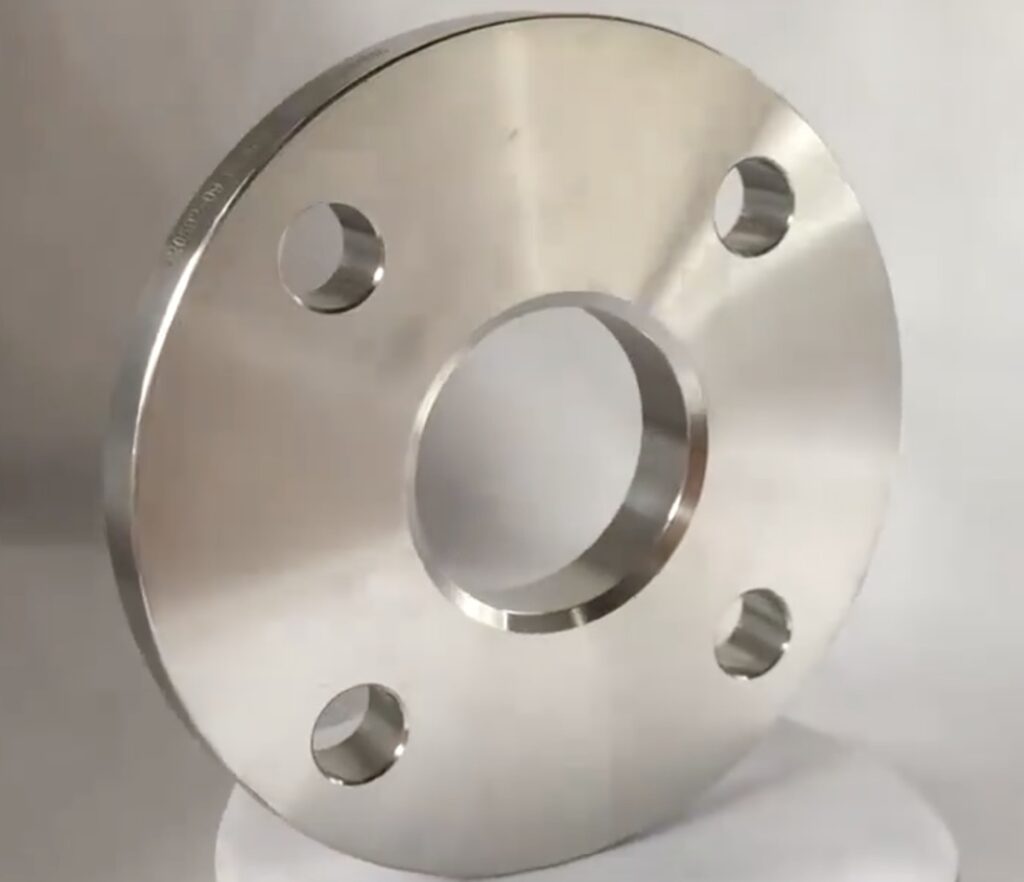
The Raised Face flange is the most common type used in process plant applications, and is easily to identify. It is referred to as a raised face because the gasket surfaces are raised above the bolting circle face. This face type allows the use of a wide combination of gasket designs, including flat ring sheet types and metallic composites such as spiral wound and double jacketed types.
The purpose of a RF flange is to concentrate more pressure on a smaller gasket area and thereby increase the pressure containment capability of the joint. Diameter and height are in ASME B16.5 defined, by pressure class and diameter. Pressure rating of the flange determines the height of the raised face. The typical flange face finish for ASME B16.5 RF flanges is 125 to 250 µin Ra (3 to 6 µm Ra).
Slip on Flange Materials We Offer
| Standard | Material Grade |
|---|---|
| Carbon Steel | ASTM A105, A350 LF2, A694 F52/F60/F65 P245GH, C22.8, S235JR, S355J2,P250GH,P265GH,ASTM A105, ASTM A 350 LF1, LF2, LF3,API 6A AISI 4130 |
| Stainless Steel | ASTM A182 F304/L, F316/L, F321, F347, F51, F53, F55 1.4301 (304), 1.4307 (304L), 1.4404 (316L), 1.4541 (321), 1.4571 (316Ti) |
| Alloy Steel | ASTM A182 F11, F12,F22, F5, F9, A182 F91 16Mo3, 13CrMo4-5, 10CrMo9-10 |
| Nickel Alloys | Inconel 625, Incoloy 825, Hastelloy C276 |
| Duplex / Super Duplex | UNS S31803, S32205, S32750, S32760 |
| Special Materials | 904L (1.4539), Monel 400, Titanium, Aluminum, Copper-Nickel |
Manufacturing & Testing for Slip on Flange
- Forged blank
- CNC machining
- Heat treatment: Normalizing, Quenching + Tempering, Annealing
- NDT: UT / PT / MT / RT
- PMI, hydrostatic testing, hardness & impact testing (on request)
- MTC: EN 10204 3.1 / 3.2, Third-party inspection (TÜV, SGS, BV)
How to choose Between Slip on Flange and Weld Neck Flanges
- A slip-on flange is a type of pipe flange that is slipped over the end of a pipe and welded in place.
- A weld neck flange is a type of pipe flange that has a neck that is welded to the pipe.
- Slip-on flanges are typically used for low-pressure applications, while weld neck flanges are used for high-pressure applications.
- Slip-on flanges are easier to install than weld-neck flanges, but weld-neck flanges provide a stronger connection.
- Weld neck Flanges are easier to align than Slip-on-flanges during the welding process because the centre of the bore of a Weld neck Flange is in alignment with the centerline of the connected pipe, while the bore of a Slip-on Flange is not in alignment with the centerline of the connected pipe.
Which One Should You Choose?
- Choose Weld Neck Flange if:
- You’re dealing with high pressure, high temperature, or hazardous fluids
- You need long-term fatigue resistance
- The flange is part of a critical system (e.g. refinery, power plant)
- Choose Slip-On Flange if:
- You need a low-cost solution
- The application is low-pressure or non-critical
- You want easier and faster installation
Plate Flange/Slip on Flange standard
| JIS 5K | DIN 2573 PN 6 | UNI 2276 PN 6 |
| JIS 10K | DIN 2576 PN 10 | UNI 2277 PN 10 |
| JIS 16K | DIN 2502 PN 16 | UNI 2278 PN 16 |
| JIS 20K | DIN 2503 PN 40 | UNI 6084 PN 40 |
| EN 1092-1 TYPE 01A PN 6 | AS2129 TABLE E | Class 150 lbs ASME B16.5 |
| EN 1092-1 TYPE 01A PN 10 | Class 300 lbs ASME B16.5 Slip on flanges | |
| EN 1092-1 TYPE 01A PN 16 | 600 lbs ASME B16.5 Slip on flanges | |
| EN 1092-1 TYPE 01A PN 25 | ||
| EN 1092-1 TYPE 01A PN 40 |
Gost flat Flange